Jaeger-LeCoultre · Automatic
770
Introduced in 2015 in the Geophysic, caliber 770 features a dead-beat seconds and a date function.
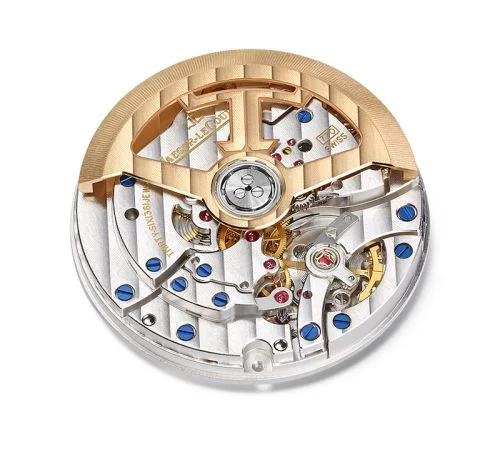
- Winding
- Automatic
- Power Reserve
- 40 hours
- Frequency
- 28,800 vph (4 Hz)
- Jewels
- 36
- Height
- 6.57 mm
About the Jaeger-LeCoultre 770
From a technical perspective, one of the most notable features of caliber 770 and 772 is the atypical balance wheel featuring a non-circular configuration that required lengthy research in order to reduce air resistance. Named the Gyrolab®, this device was initially developed in a laboratory version back in 2007 to equip the Master Compressor Extreme Lab 1 watch. It took eight years to transition from the confidential version to one that could be incorporated into an entire watch line. Geophysic® is the first collection to enjoy the full benefits of this key breakthrough and its determining influence on the precision of the watch.
This precision is also expressed by the true seconds system that causes the seconds hand to move forwards while "beating the second", meaning by performing a jump every second. This is no ordinary feat for a mechanical movement, and one that does not disturb the smooth running of the watch. The true seconds mechanism involves an extremely sophisticated construction whose effectiveness is expressed on the dial by a pleasantly rhythmical reading of the seconds. This specific expertise, which has been mastered by Jaeger-LeCoultre since the 19th century, testifies to the authentic instrument-worthy nature of the Geophysic.
Watches with this movement
4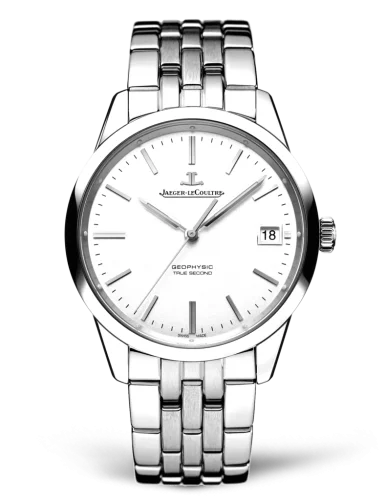
Jaeger-LeCoultre
Geophysic True Second Stainless Steel / Silver / Bracelet
8018120 · 39 mm
Jaeger-LeCoultre
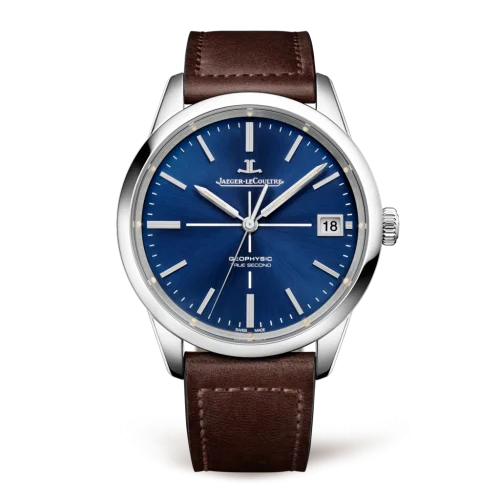
Geophysic True Second Stainless Steel / Blue
8018480 · 39.6 mm
Jaeger-LeCoultre
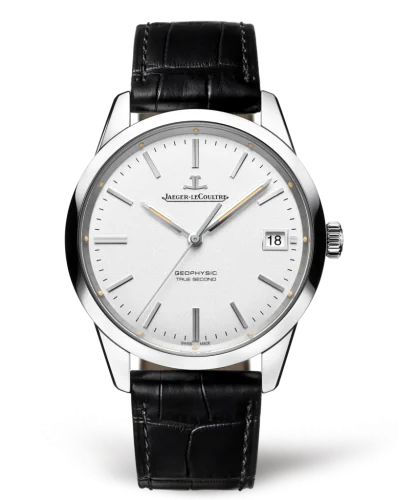
Geophysic True Second Stainless Steel / Silver / Alligator
8018420 · 39.6 mm
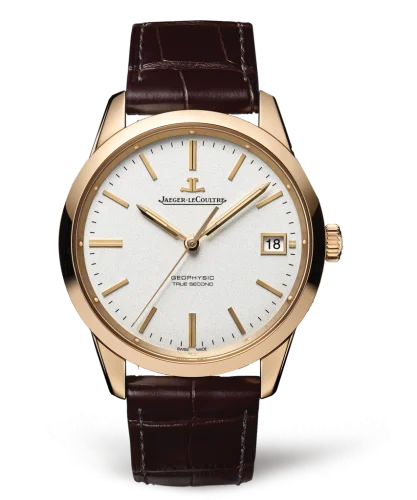
Jaeger-LeCoultre
Geophysic True Second Pink Gold
8012520 · 39 mm
Discussion
0 commentsLoading…