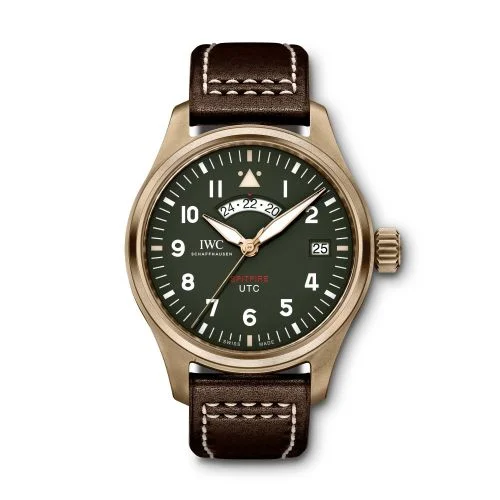
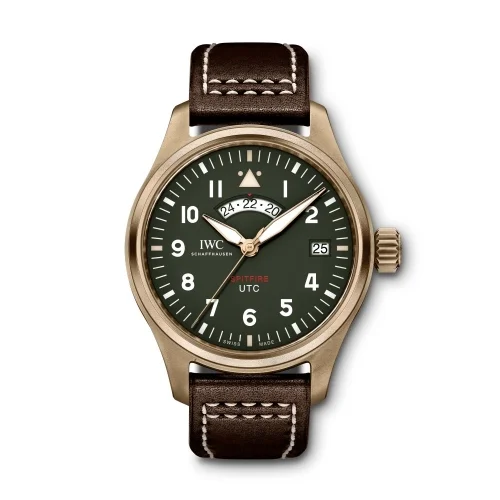

Pilot's Watch UTC Spitfire Edition 'MJ271'
REF. IW3271-01
5/10
ScarceCase
Dial
In Context
At 41 mm it is sized to the current mainstream: 40 mm is the median across every watch measured in this catalogue. At 14.2 mm it is a tall case, and it will catch on a cuff. The case back is closed, so the movement stays out of sight, and the sapphire crystal will resist everything short of deliberate abuse. 60 m covers rain and hand-washing comfortably; it is not a watch to swim in.
The movement winds itself from the motion of your wrist. 60 hours of reserve is enough to set it down on Friday evening and find it still running on Monday. At 28,800 vph the seconds hand advances 8 times a second.
IW3271-01 stands on its own in this catalogue — no other reference here shares its base number. It pairs a green matte dial with a titanium, bronze case. It was a limited edition. Introduced in 2019.
Inside: Caliber 82710
Explore this caliber →The IWC-manufactured 82000 calibre ties in with the tradition of high-quality automatic movements from IWC. It is fitted with the highly efficient IWC Pellaton automatic winding system, which uses both directions of the rotor to wind the mainspring. As in the IWC-manufactured 52000 calibre family, components in the system subject to pronounced stress, such as the pawls, the automatic wheel, or the cam, are made of ceramic. Thanks to the use of this high-tech material, they are virtually wear-free. The efficient automatic winding system builds up a power reserve of at least 60 hours in the mainspring. The indexless balance with a flat coil oscillates at a frequency of 4 hertz (28,800 beats per hour), ensuring a high level of precision. The rotor is skeletonised and offers a view of the movement decorated with circular graining and Geneva stripes.
Similar Watches
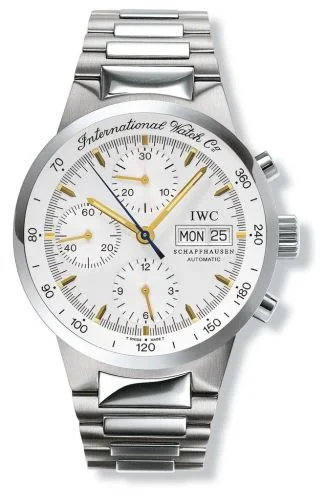
IWC - IW3707-11 GST Chronograph Automatic Stainless Steel / Silver / German
IWC
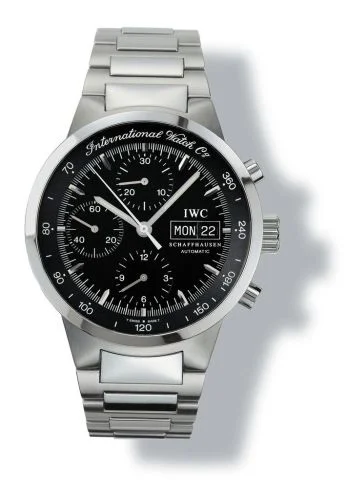
IWC - IW3707-06 GST Chronograph Automatic Stainless Steel / Black / German
IWC
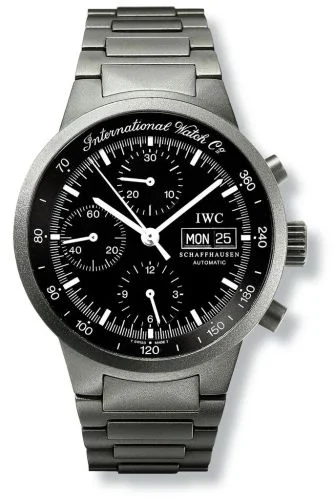
IWC - IW3707-01 GST Chronograph Automatic Titanium / German
IWC
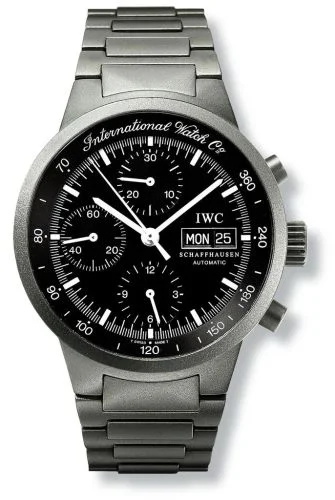
IWC - IW3707-03 GST Chronograph Automatic Titanium / English
IWC
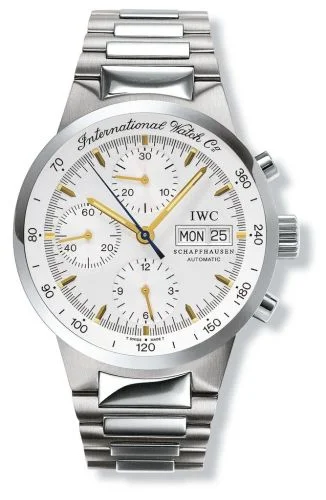
IWC - IW3707-13 GST Chronograph Automatic Stainless Steel / Silver / English
IWC
Discussion
0 commentsLoading…